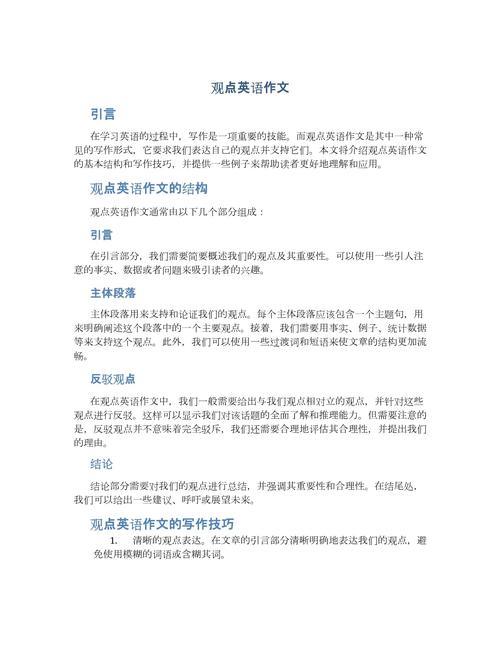
第一部分:核心原则
一篇好的议论文,无论题目是什么,都必须具备三个核心要素:
- 清晰的结构: 读者能轻松地跟上你的思路。
- 有力的论证: 你的观点必须有理有据,令人信服。
- 准确的语言: 使用恰当的词汇和语法来表达你的思想。
第二部分:经典五段式结构
这是最常用、最稳妥的议论文结构,适合初学者和应试。
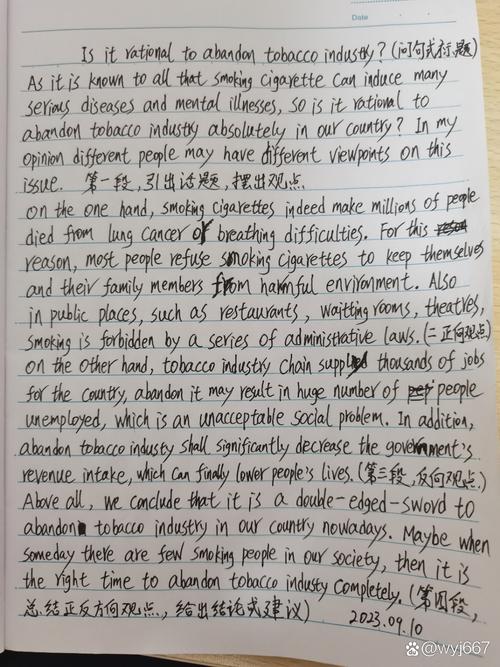
第一段:引言
目标: 开门见山,引出话题,明确你的观点,并预告文章的论证方向。
结构:
- 背景/“钩子” (Hook): 用一个引人入胜的开头吸引读者,可以是一个普遍现象、一个名言、一个设问或一个有趣的事实。
- 背景信息: 简要介绍话题背景,让读者了解你要讨论的是什么。
- 论点: 这是全文最重要的句子! 清晰、明确地陈述你的中心观点,通常是一个包含“虽然.....”结构的句子,显得更客观、全面。
- 公式:
While some people argue that [反方观点], I firmly believe that [你的观点].
- 公式:
第二、三、四段:主体段落
目标: 从三个不同的角度论证你的观点,让论证更充分、更有说服力。
结构(每个段落都遵循这个模式):
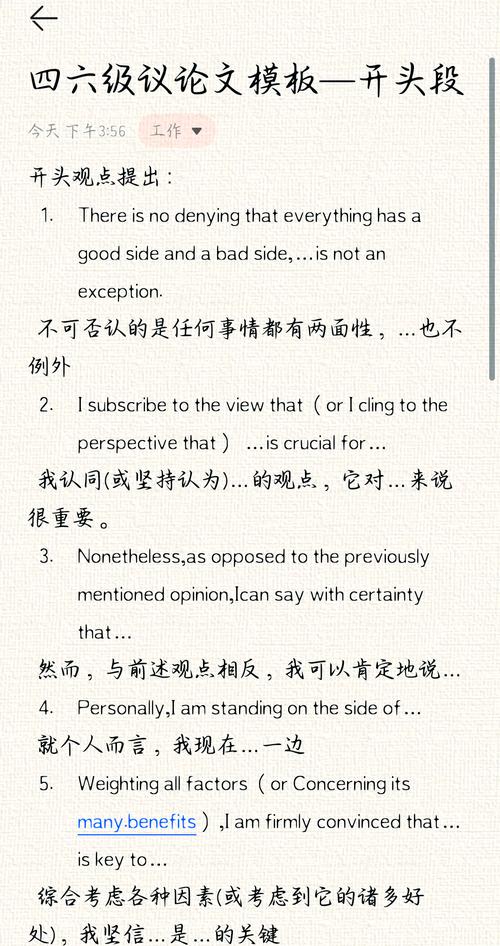
- 主题句: 段落的第一句话,清晰地提出本段的分论点。
- 解释/阐述: 用一两句话解释你的主题句,让观点更清晰。
- 论据/例证: 这是段落的核心! 用具体的例子来支撑你的观点,例子可以是:
- 个人经历
- 历史事件
- 科学研究数据
- 名人名言
- 文学作品
- 小结/过渡: 简要总结本段,并自然地过渡到下一段。
写作技巧:
- 主体段1: 通常从最普遍、最容易理解的论点开始。
- 主体段2: 提出更深层次的论点,或者从不同角度(如个人、社会、经济)进行论证。
- 主体段3: 可以提出一个“让步段”(Concession),承认反方观点有一定道理,但指出其局限性,然后进一步强调自己观点的正确性,这会让你的文章显得更客观、更有深度。
- 句型:
Admittedly, [反方观点] has some merits. However, [驳斥并重申己方观点].
- 句型:
第五段:结论
目标: 总结全文,重申观点,并升华主题,给读者留下深刻印象。
结构:
- 重申论点: 用不同的措辞再次强调你的中心观点。千万不要直接复制第一段的论点句。
- 总结分论点: 简要回顾主体段的几个主要论点。
- 升华/展望: 提出一个引人深思的问题,或者对未来做出展望,或者提出一个建议,让文章的立意更高。
- (可选)强有力的结尾句: 用一句有力的话结束全文,呼应开头的“钩子”。
第三部分:写作步骤
- 审题: 仔细阅读题目,确保你完全理解要讨论的话题和写作要求。
- 头脑风暴: 花5分钟快速写下与话题相关的所有想法、关键词和例子。
- 确定论点: 在头脑风暴的基础上,选择一个你最熟悉、最有话说的观点作为你的中心论点。
- 列提纲: 根据五段式结构,列出你的文章大纲,这能确保你的逻辑清晰,不跑题。
- 钩子 + 背景 + 论点
- 主体段1: 主题句 + 解释 + 例证
- 主体段2: 主题句 + 解释 + 例证
- 主体段3: 主题句 + 解释 + 例证 (可以是让步段)
- 重申论点 + 总结分论点 + 升华
- 初稿: 根据提纲,一气呵成地写出文章,不要过分纠结于某个词或句子,先把思路表达出来。
- 修改与润色:
- 论点是否清晰?论据是否充分?
- 结构: 段落之间过渡是否自然?
- 语言: 有没有更高级的词汇可以替换?有没有语法错误?句子是否多样化?
- 拼写和标点。
第四部分:实用句型和词汇
引出话题/背景
In recent years, the issue of... has sparked a heated debate.近年来,……的问题引发了激烈的辩论。
 (图片来源网络,侵删)
Nowadays, there is a growing concern over...人们越来越关注……
When it comes to..., people's opinions vary.当谈到……时,人们的看法各不相同。
表明观点
From my perspective, ...在我看来,……
As far as I am concerned, ...就我而言,……
I am convinced that ...我确信……
There is no denying that...不可否认……
举例说明
A case in point is...一个恰当的例子是……
To illustrate, ...为了说明,……
This can be best exemplified by...这可以通过……得到最好的证明。
表示对比/转折
However, ...Nevertheless, ...On the contrary, ...In contrast, ...While it is true that..., it is also important to note that...虽然……是真的,但同样重要的是……
表示让步
Admittedly, ...诚然,……
Granted, ...即使……,也……
It is true that..., but...……是真的,…
得出结论
In conclusion, ...To sum up, ...Overall, ...All in all, ...Taking all these factors into account, we can safely draw the conclusion that...考虑到所有这些因素,我们可以有把握地得出结论……
第五部分:范文示例
Topic: Should university students be required to take a basic course in financial management?
五段式提纲:
- Introduction: Hook (many students graduate with debt) + Background (financial literacy is crucial) + Thesis (a basic finance course is highly beneficial).
- Body 1: Topic Sentence (helps manage personal debt) + Explanation (student loans, credit cards) + Example (avoiding bad debt, creating a budget).
- Body 2: Topic Sentence (prepares for future life) + Explanation (saving, investing, retirement) + Example (understanding compound interest, avoiding financial scams).
- Body 3 (Concession): Topic Sentence (some argue it's not the university's job) + Explanation (families should teach it) + Rebuttal (many families lack knowledge, university provides structured, unbiased education).
- Conclusion: Restate Thesis + Summarize Body points + Final thought (it's an investment in students' long-term well-being).
Essay:
In an era where student loans and credit card debt are increasingly common among young adults, the question of whether universities should mandate a basic course in financial management has become more pertinent than ever. While some contend that personal finance is a matter for families to handle, I firmly believe that such a course is an essential component of modern higher education, equipping students with vital life skills.
Firstly, a basic finance course would empower students to manage their personal debt more effectively. University life is often the first time young people are faced with significant financial responsibilities, from tuition fees and accommodation costs to daily expenses. Without proper guidance, it is easy to fall into the trap of high-interest credit card debt or to mismanage student loans. For instance, learning to create a realistic budget and understand the implications of interest rates can help students make informed decisions, avoid crippling debt, and build a healthy financial foundation from the very beginning.
Furthermore, this course would prepare students for the long-term financial challenges of adult life. The principles of saving, investing, and planning for retirement are not typically covered in standard academic curricula, yet they are fundamental to achieving financial stability and security. By understanding concepts like compound interest or the importance of an emergency fund, students can start planning for their future earlier. This knowledge acts as a shield against potential financial pitfalls, such as predatory investment schemes or the inability to cope with unexpected expenses, ensuring they are better prepared for the economic realities that lie ahead.
Admittedly, some argue that financial education should begin at home and that it is not the university's responsibility to teach such practical skills. They contend that families should shoulder this duty. While family influence is undoubtedly important, this argument overlooks the reality that many families themselves may lack a solid understanding of modern financial products and strategies. A university course offers a structured, standardized, and unbiased source of information that can benefit all students, regardless of their family background.
In conclusion, requiring university students to take a basic course in financial management is a wise investment in their future. It not only helps them navigate the immediate challenges of student debt but also arms them with the essential knowledge for long-term financial well-being. By integrating this practical skill into the curriculum, universities can better prepare their students not just for their careers, but for life.