第一部分:核心逻辑与结构词
这类词汇是议论文的“骨架”,用于清晰地展开你的论证、过渡和总结。
引入话题/表明立场
-
常规表达:
 (图片来源网络,侵删)
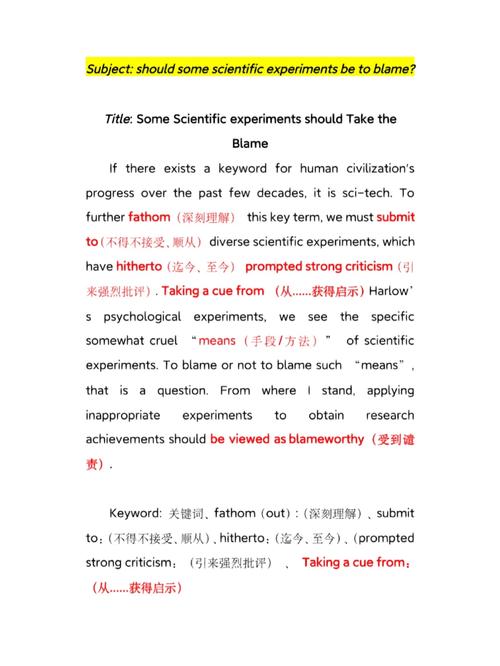
The issue of... is a controversial one.(……是一个有争议的问题。)There is a growing debate about whether...(关于是否……,争论日益激烈。)In this essay, I will argue that...(我将论证……。)
-
高级/地道表达:
The topic of... has sparked intense public discussion.(……这个话题引发了激烈的公众讨论。)When it comes to..., opinions are sharply divided.(当谈到……时,人们意见不一。)This essay posits that...(本文主张……。) -Posit比argue更正式,学术感更强。From my perspective / In my view,...(在我看来……。)
支持论点
-
常规表达:
First, / Secondly, / Finally,(第一,/ 第二,/ )For example, / For instance,()This is because...(这是因为……。)
-
高级/地道表达:
- First and foremost, () - 比
First更有强调意味。 - Furthermore, / Moreover, / In addition, () - 递进关系,比
Also更正式。 - A case in point is... (一个恰当的例子是……。) - 非常地道的表达。
- This can be illustrated by the fact that... (这一点可以从……的事实中得到说明。)
- The primary justification for this is... (支持这一观点的主要理由是……。)
- First and foremost, () - 比
让步与反驳
这是展示你思辨能力的关键部分,表明你考虑到了问题的另一面。
(图片来源网络,侵删)
-
常规表达:
Some people think that...(一些人认为……。)However, I disagree.(我不同意。)On the other hand,...()
-
高级/地道表达:
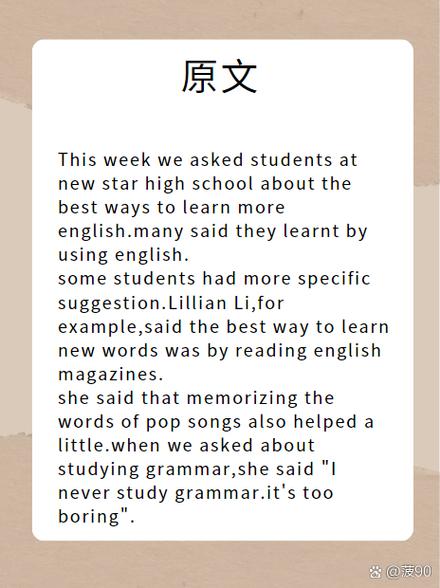
- It is undeniable that... (不可否认的是……。) - 承认对方观点有一定道理。
- Admittedly, / Granted, (诚然,) - 让步的经典用法。
- Proponents of this view claim that... (这一观点的支持者声称……。)
- While this argument has some merit, it fails to consider... (尽管这个论点有一定道理,但它忽略了……。)
- This line of reasoning is flawed for several reasons. (这一推理过程有几个缺陷。)
- A more compelling argument is that... (一个更有说服力的论点是……。)
强调观点
-
常规表达:
Very important.(非常重要。)So...(…。)
-
高级/地道表达:
 (图片来源网络,侵删)
- Crucially, / Importantly, (关键的是,/ 重要的是,)
- It is imperative that we... (我们必须……。) -
Imperative表示“必要的,紧急的”,语气强烈。 - This point cannot be overstated. (这一点怎么强调都不为过。)
- The central issue here is... (这里的核心问题是……。)
-
常规表达:
In conclusion,()To sum up,()
-
高级/地道表达:
- In light of the above arguments, (鉴于上述论点,)
- Having considered both sides of the issue, it is clear that... (在考虑了问题的双方之后,很明显……。)
- To conclude, it is my firm conviction that... (我坚信……。) -
Firm conviction(坚定的信念) 比belief更有力。 - Ultimately, the weight of the evidence suggests that... (证据的分量表明……。)
第二部分:论证与分析词汇
这类词汇用于深入分析原因、结果、影响,让你的论证更有深度。
原因与结果
-
Cause (原因):
The root cause of... is...(……的根本原因是……。)This phenomenon can be attributed to...(这一现象可归因于……。) -Attribute to是非常地道的用法。A contributing factor is...(一个促成因素是……。)
-
Effect/Result (结果):
As a result, / Consequently, / Therefore,(/ )This leads to / results in / gives rise to...(这导致/引发了……。)The long-term implications of this are profound.(其长远影响是深远的。)
比较与对比
-
Compare (比较):
Similarly, / Likewise,(相似地,)... shares many similarities with...(……与……有许多相似之处。)Both A and B are characterized by...(A和B都以……为特征。)
-
Contrast (对比):
In contrast, / On the contrary,(与此相反,)Conversely,(相反地,)The key difference between A and B lies in...(A和B之间的关键区别在于……。)While A is..., B is...(虽然A是……,但B是……。)
定义与解释
By..., I mean...(我所说的……是指……。)... can be defined as...(……可以被定义为……。)This term refers to...(这个术语指的是……。)In essence, / In simple terms,(本质上,/ )
第三部分:主题与观点词汇
这类词汇让你的文章内容更丰富,避免重复使用 good, bad, important。
积极观点
- Beneficial / Advantageous: (有益的 / 有优势的)
This policy is highly beneficial for the elderly.(这项政策对老年人非常有益。)
- Pivotal / Crucial: (关键的 / 至关重要的)
Education is pivotal to personal development.(教育对个人发展至关重要。)
- Promising: (有前途的 / 有希望的)
This new technology shows promising results.(这项新技术显示出很有希望的结果。)
- Viable: (可行的)
It is a viable solution to the traffic problem.(这是解决交通问题的一个可行方案。)
消极观点
- Detrimental / Harmful: (有害的)
Pollution has a detrimental effect on marine life.(污染对海洋生物有害。)
- Problematic / Flawed: (有问题的 / 有缺陷的)
His argument is fundamentally flawed.(他的论点有根本性的缺陷。)
- Controversial: (有争议的)
The practice of cloning is highly controversial.(克隆技术极具争议。)
- Short-sighted: (短视的)
It is a short-sighted approach to environmental protection.(这是一种短视的环境保护方法。)
中性/客观描述
- Phenomenon: (现象)
Social media is a global phenomenon.(社交媒体是一个全球性的现象。)
- Trend: (趋势)
There is a growing trend of working from home.(远程办公的趋势日益增长。)
- Perspective / Viewpoint: (观点 / 视角)
From an economic perspective, this decision makes sense.(从经济角度来看,这个决定是合理的。)
- Dilemma: (困境)
We face a moral dilemma.(我们面临一个道德困境。)
第四部分:高级连接词与短语
这些词汇能让你的句子衔接更流畅,逻辑更严密,是拿高分的“利器”。
- 表递进:
Not only..., but also...(不仅………)What is more,()
- 表转折:
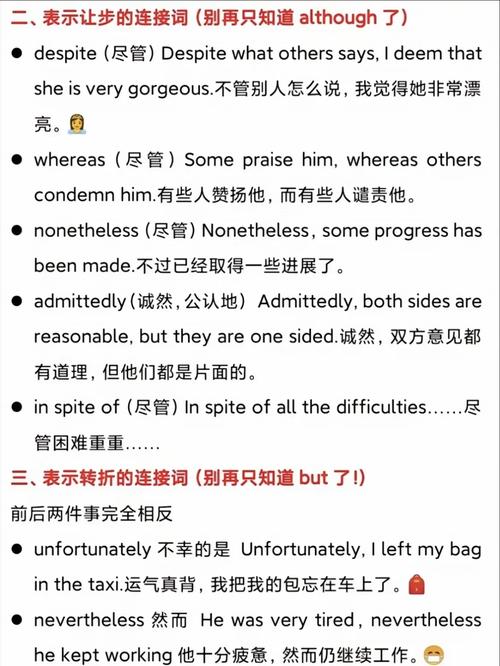
Having said that,(话虽如此,) - 比However更委婉。Be that as it may,(尽管如此,) - 非常正式的让步。
- 表因果:
Thus, / Hence, / Consequently,() - 比So更正式。As such,() - 指代上文所述情况。
- 表总结:
All things considered,(全面考虑之后,)To put it another way,(换句话说,) - 用于换一种方式解释。
使用建议与技巧
- 切忌堆砌: 不要为了用高级词而用,确保你使用的词汇准确地表达了你的意思,一个用得恰到好处的简单词,远胜于一个用得错误的复杂词。
- 搭配是关键: 词汇不是孤立存在的,注意它们的固定搭配和用法。
- 错误:
make a decision(正确) - 错误:
do a decision(错误) - 正确:
pose a threat(正确) - 错误:
make a threat(错误)
- 错误:
- 多读多模仿: 大量阅读高质量的英文议论文(如 The Economist, The Guardian 的社论),学习作者是如何运用这些词汇构建论证的。
- 建立自己的词汇库: 按照以上分类,整理出你最喜欢、最常用的词汇和短语,并尝试在自己的写作中反复练习,直到能够熟练运用。
掌握这些词汇,并结合清晰的逻辑和充分的论据,你的英语议论文水平一定会迈上一个新台阶,祝你写作顺利!